By Josie Ridpath, LICSW | Licensed Therapist & Founder of Inspired Bravery Counseling, LLC
The yelling usually happens after a long day of being stretched in multiple different directions.
The house is still a mess after feeling like all you do is clean. The shoes aren't on after the fourth time asking. Your kids have found a new volume that louder than what you thought was possible. And then that one things happens and a wave of anger comes up, and you snap.
Once the intensity of the situation and your emotions quiet down, you're left with swirling thoughts in your brain like:
"Why couldn't I just keep it together?"
"Why am I letting small things make me so angry?"
"What is wrong with me?"
Hi, I’m Josie. I’m a licensed clinical social worker and therapist specializing in maternal mental health in Minnesota. I help moms move past constant overwhelm so they can lead their homes with steady, grounded confidence. I'm also a mom to almost three in less than three years and I'm in need of what I'm about to share just as much as the next person.
If you are tired of feeling the mom rage have the driver seat and want to reclaim true control over your reactions, let's look at what is happening under the surface, and how to stop adding big emotions to big situations.
What Is Mom Rage? (Understanding Impulse vs. Action)
When I work with moms on anger in motherhood, my goal isn't to dismiss the feeling or offer excuses. It’s to help you understand what your body is signaling so you can know what you do next.
Feeling anger does not make you a terrible person, it is one of the many emotions that as humans we have and experience. It is a biological alarm system. When you are navigating constant physical touch, noise, decision fatigue, and an endless to-dos, your nervous system interprets that overstimulation as a threat. Anger is simply the body's fight-or-flight response getting triggered.
However, there is an important distinction between the impulse and the action:
- The Biological (the actual action of being mad) Signal: Anger is an indicator that your capacity is depleted.
- The Trap to Avoid: Using overstimulation to justify losing control.
- Our Goal as Moms: Responsibility: Setting boundaries, Being Self-Aware, etc.
Feeling overstimulated is a natural human reaction. But using overstimulation as an excuse to yell or react takes away your personal power. You are fully capable of feeling a surge of frustration and choosing to be mindful in how you response.
How to Stop Snapping at Kids:
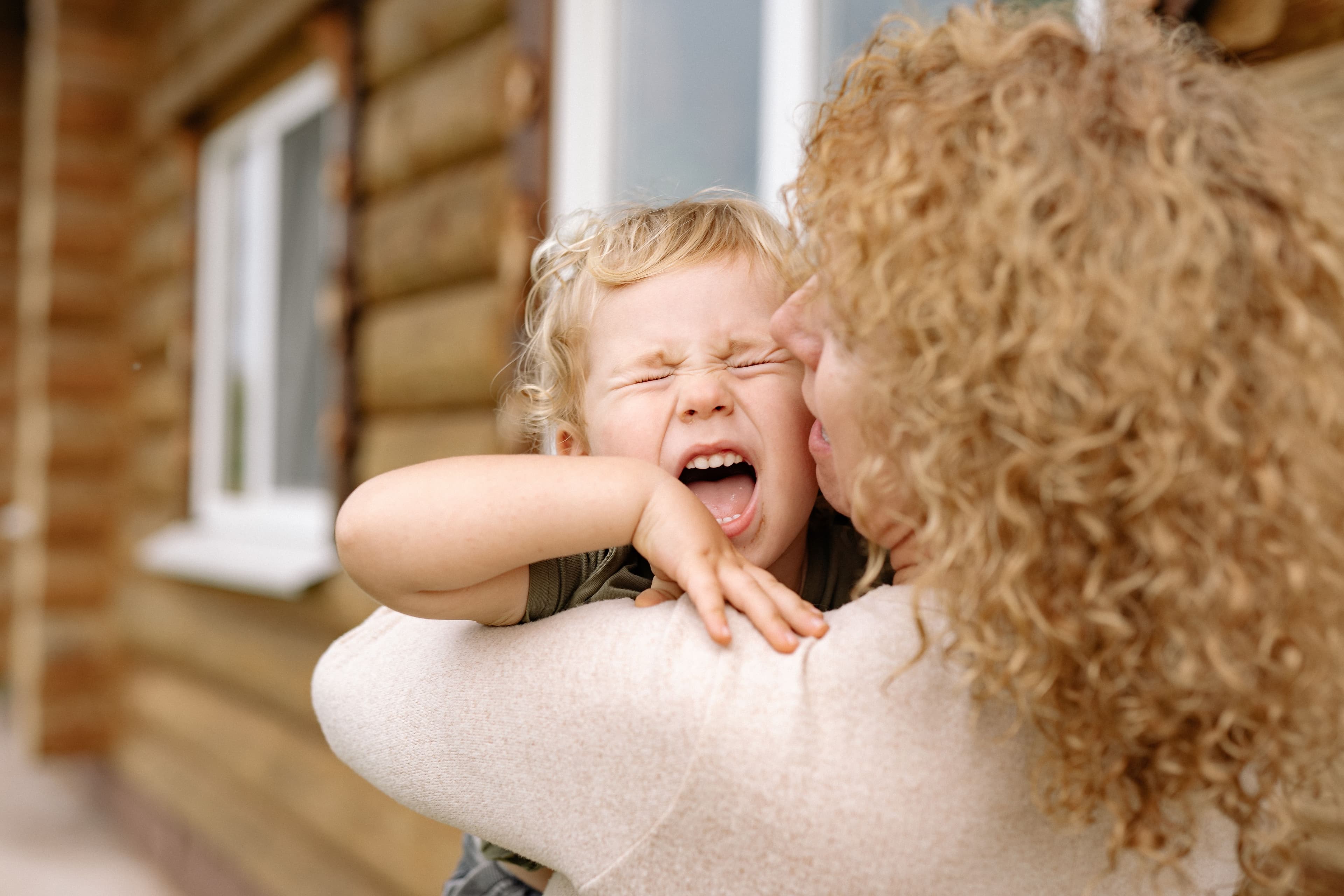
When a child has a meltdown, throws a toy, or refuses to listen, they are bringing a "storm" into the room. They are young, their brains are developing, and they lack emotional regulation.
As the adult in the room, your job is to set the "temperature" of the home.
If your child brings a big, chaotic emotion to a situation, and you match it with your own big, uncontrolled emotion, you aren't solving the problem, you’re fueling the fire. A child cannot learn how to regulate their emotions if the adult teaching them is also unregulated.
- Child's Emotions + Mom's Rage = Escalated Chaos
(Meltdown / Disobedience) + (Yelling / Reactivity) = Fueling the Fire - Child's Emotions + Mom's Calm = De-escalation & Safety
(Meltdown / Disobedience) + (Steady Boundary) = Being the Anchor
When you stay grounded, you show your kids that big feelings can exist without taking over the home (or each other). You become the steady anchor they need, rather than another storm they have to survive.
Emotional Control: 3 Steps to Stop Snapping When Overstimulated
Taking ownership over your own emotions doesn't mean you will never feel angry again. Instead, you're choosing to build the discipline to manage that anger before it dictates your actions. Try using these three steps when you feel your temperature rising:
1. Own the Signal Fast
The moment you feel your jaw clench or your chest tighten, acknowledge it internally: "I am feeling angry right now." Naming the feeling shifts your brain out of pure emotional reflex and back into the logical prefrontal cortex, giving you a moment to decide how you want to show up in the following moments.
2. Lower Your Voice, Don't Raise It
When you feel the urge to yell, consciously drop your tone to a low, steady whisper. Raising your voice signals to your own nervous system that you are in a fight; lowering your voice forces your body to slow down and models self-control for your children. It can act as a "distraction." You're not focusing on your little one's actions, you're focusing on your own now.
3. Take a Step Back
Stepping away for 60 seconds to take a deep breath or place cold water on your hands isn't selfish, it’s control. Taking responsibility for your emotional state ensures you return to your family equipped to lead with patience rather than reactivity.
How to Repair with Your Child After Losing Your Patience
This is easier said than done, but that doesn't mean it's not worth working on. You will have moments that the old patterns will occur, but overtime, you will begin to see those old patterns replaced with ones that help you feel proud of the mom that you are showing up as. When that happens, true self-awareness means acknowledging it without making excuses.
Instead of saying: "I wouldn't have yelled if you had just listened to me!" (which places responsibility for your adult emotions on a child), practice clean repair:
"I felt very frustrated earlier, but it was not okay for me to raise my voice. I am working on staying calm, and I am sorry for yelling."
This models maturity: taking responsibility for your actions, making things right, and committing to doing better next time.
Taking Ownership of Your Anger with a Minnesota Therapist
Learning to control your emotions when you are burned out is hard work, especially if you never saw steady emotional regulation modeled growing up.
Therapy isn't about giving you permission to stay reactive, nor is it about placing shame on you for being human. It is a dedicated, private space to build your emotional strength, address and minimize triggers, and step into the steady leader your family needs.
As a therapist specializing in mom rage and anger therapy in Minnesota, I help women stop reacting to the big emotions your littles have and help moms bring calm to their homes.
Ready to Reclaim Calm in Your Home?
You don't have to stay stuck in the exhausting cycle of yelling and regretting it. You can build the capacity to stay grounded, even in the middle of chaotic moments.
Take the first step toward being a calm mom:
Schedule a Free 15-Minute Consultation Today